Energy efficiency
Energy efficient buildings which use furthermore renewable energy minimize the consumption of non renewable natural resources and help decreasing the emission of air pollutants. They reduce costs and offer a comfortable and healthy living atmosphere.
In this respect EESAC can perform audits to evaluate the energy efficiency of existing buildings. We develop unbiased concepts for improvement and compile economical analyses for the optimization of reasonable investments.
Energy efficient buildings which use furthermore renewable energy minimize the consumption of non renewable natural resources and help decreasing the emission of air pollutants. They reduce costs and offer a comfortable and healthy living atmosphere.
In this respect EESAC can perform audits to evaluate the energy efficiency of existing buildings. We develop unbiased concepts for improvement and compile economical analyses for the optimization of reasonable investments.
|
 |
Certifications
 |
|
|
 |
|
 |
Example of a real project
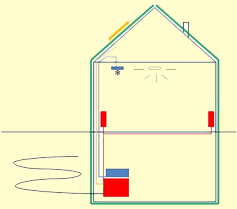
Evaluation of the initial situationThe fossil fuel and electricity consumption of an existing house was assessed to be close to 360 kWh/m2 per year by standard use.
Objective of the study
Different possibilities were investigated in order:
|
 |
Outcome
The study took into account the interactions of the considered measures as well as their financial impacts.
It resulted that in this special case the following measures were ecologically reasonable and economically acceptable.
- an additional isolation of the basement and the top floor
- an isolation of the hot water distribution system
- the replacement of the windows by better isolating, double-glazed windows
- the installation of a solar thermal system
Providing all these measures would be implemented, the final energy consumption by standard use of this house was estimated to be close to 177 kWh/m2 per year;
i.e. a reduction of more than 50% compared to the initial situation.
The payback time for all these measures was estimated to be 15 years, considering that the energy prices increase by 6% per year and bank interests stay at 5%. 15 years means 5 years less than the durability of the windows which have the shortest lifetime of all implemented measures. If public subsidies are granted, the time for depreciation can be significantly reduced.